+506 2216 0222
paesa@iica.int


DID YOU KNOW?
-
Community alert prevented deaths
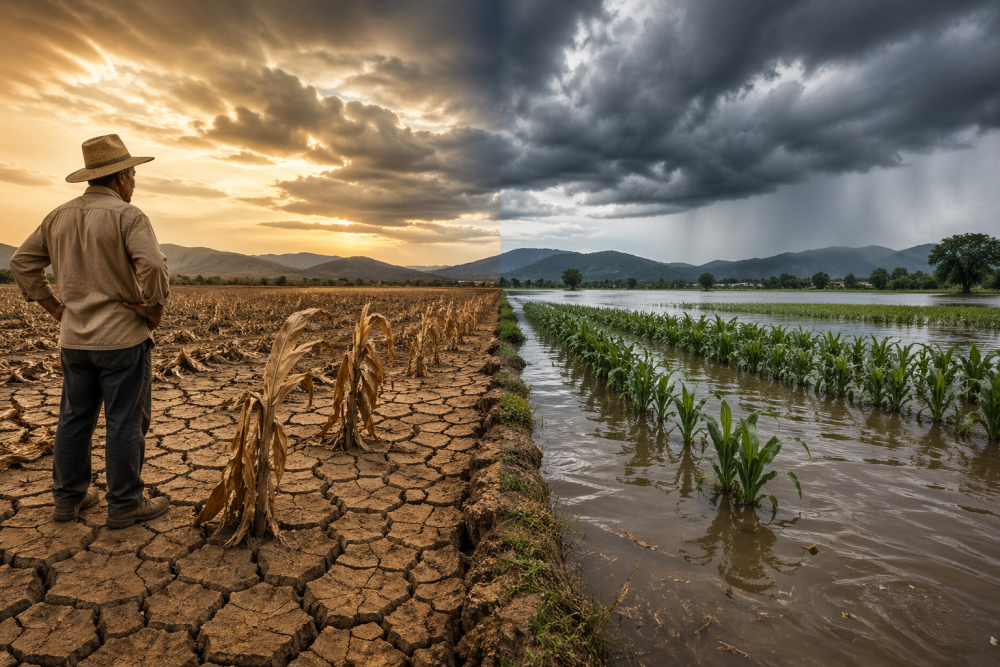
19 people, mostly women farmers, operate the Community Hydroclimatic Monitoring Network in southern Ahuachapán, El Salvador; during Tropical Storm Julia, an alert issued after more than six hours of rain enabled vulnerable families to evacuate two h... -
Only 6% of budgets prevent future risks
83% of disasters in Latin America and the Caribbean are related to climate hazards, but only 6% of the regional risk-management budget is allocated to preventing future risks and 16% to reducing existing risks. -
1.7 million disaster displacements
1.7 million new internal displacements caused by disasters were recorded in 2024 in Brazil, Cuba, Colombia, Haiti and Ecuador alone, according to the 2025 Global Report on Internal Displacement cited by the source.
Support to technological research and development
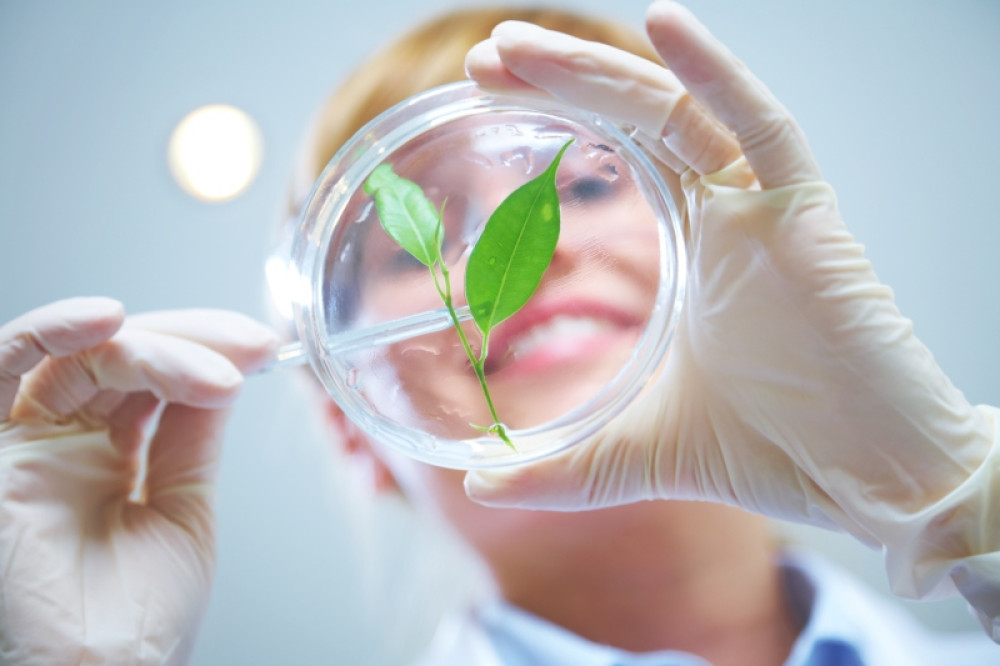
The support is aimed at promoting research and technological development in knowledge generation and problem-solving. This support can come in the form of financing, infrastructure, equipment, training programs, capacity management, and regulatory measures
Resources
(142 records
)

Evidences
(2554 records
)
Community alert prevented deaths
19 people, mostly women farmers, operate the Community Hydroclimatic Monitoring Network in southern Ahuachapán, El Salvador; during Tropical Storm Julia, an alert issued after more than six hours of rain enabled vulnerable families to evacuate two hours before the rivers overflowed, with no loss of life.
Only 6% of budgets prevent future risks
83% of disasters in Latin America and the Caribbean are related to climate hazards, but only 6% of the regional risk-management budget is allocated to preventing future risks and 16% to reducing existing risks.
1.7 million disaster displacements
1.7 million new internal displacements caused by disasters were recorded in 2024 in Brazil, Cuba, Colombia, Haiti and Ecuador alone, according to the 2025 Global Report on Internal Displacement cited by the source.
More recent in politics
Investments and Public Expenditure
(284 records
- USD 9,463,372,216.00
)
Borlaug International Agricultural Science and Technology Fellowship Program
A training and collaborative research program that promotes food security and economic growth by providing opportunities for scientists, researchers, and policymakers from developing and middle-income countries. Each participant works individually with a mentor at a United States university, research center, or government agency, usually for 8 to 12 weeks. The mentor later visits the participant's home institution to continue the collaboration.
Adoption of agricultural technologies in Argentina: Evaluation of Results, Operational Efficiency, and New Public-Private Collaboration Schemes
Technical cooperation aimed at supporting the development of new agricultural technologies and their adoption by producers in Argentina, as well as generating strategic information to prioritize international negotiations and enhance exports of innovative and value-added agro-industrial products. The initiative combines agricultural research and innovation, evaluation of results and operational efficiency, technology adoption, and analysis of new public-private collaboration schemes.
Production of Biofertilizers and Insect-Based Protein Pellets for Sustainable Agrifood Systems in Arid Areas of Northern Chile
Innovation project aimed at developing and validating a pilot process for the bioconversion of organic waste through controlled insect farming to produce biofertilizers and protein pellets intended to improve agricultural productivity and animal nutrition. The initiative is implemented in the Tarapacá Region and seeks to promote sustainable agrifood systems in arid areas through waste valorization, the use of insect biomass, improved soil fertility, and the production of locally sourced agricultural and livestock inputs.
Policy frameworks
(284 records
)
Strategy on Bioinputs Production, Use and Innovation in Costa Rica 2026-2035
National strategy setting the roadmap to 2035 to consolidate bioinputs as an accessible, competitive and quality-assured alternative for sustainable agricultural production. It is organized into four axes: (1) regulatory framework, to simplify, harmonize and update rules on the registration, classification, use, quality control and oversight of bioinputs, including efficacy protocols, user manuals and post-registration monitoring; (2) science, technology and innovation, through a national research agenda, quality and efficacy standards, a national microorganism repository and pilot projects; (3) capacity building and knowledge transfer, including specialized training, agricultural extension, inclusion of bioinput content in higher education and knowledge management; and (4) financing and promotion, with credit and incentive schemes, non-financial mechanisms such as quality seals and sustainable public procurement, and mobilization of cooperation funds. It establishes a multilevel governance structure, an action plan with targets and indicators, and evaluations at 3, 5 and 10 years.
Food 2040: Research and innovation for food systems
Food 2040 is the European Union research and innovation framework for food systems and one of the two closely interlinked components of the EU strategic approach to research and innovation towards 2040. It follows a systemic, cross-sectoral and multi-actor approach covering food processing and manufacturing, packaging, distribution and retail, food services, consumption, food waste and recycling, as well as fisheries and aquaculture. Through research and innovation, it aims to contribute to more competitive, sustainable, healthy, fair and resilient food systems while strengthening connections between knowledge generation, experimentation, investment, regulatory learning, market uptake and innovation deployment. Its shared priorities include competitiveness and innovation scale-up; food security, resilience and preparedness; natural resources and circularity; food and feed safety, nutrition and health; fairness; and global cooperation.
AgRI 2040: Research and innovation for agriculture, forestry and rural areas
Forward-looking European Union research and innovation framework for agriculture, forestry and rural areas. AgRI 2040 aims to identify, co-create and update research and innovation needs, accelerate the translation of scientific knowledge into deployable technologies and solutions, and increase uptake by farmers, foresters and rural communities. Its eight preliminary areas of action cover soils, agri-ecosystems, water and nutrients; cropping systems, plant health and protein crops; livestock systems, animal health and welfare; the bioeconomy; multifunctional forests; rural areas, services and generational renewal; stronger agri-food value chains; and digitalisation, artificial intelligence and robotics.
Good practices
(16 records
)
National Agricultural Innovation System Support Project (PNIA)
The project supports the establishment and consolidation of the National Agricultural Innovation System by strengthening the institutional capacity of the lead public agency, building decentralized innovation networks with public and private stakeholders, and administering competitive grant funds for subprojects in strategic research, adaptive research, agricultural extension, seed enterprise development, and capacity building. It includes a national and international scholarship program for researchers and extension professionals, as well as the design of a monitoring and evaluation system for the agricultural innovation system. Its objective is to create the conditions for member organizations of the national innovation system to improve their effectiveness in developing and delivering improved agricultural technologies to rural producers.
Strategy for Technological Innovation to Improve the Productivity and Competitiveness of Supply Chains in Central America and the Dominican Republic
PRESICA developed a regional agricultural innovation model based on Local Innovation Consortia, which bring together producers, research institutes, universities, NGOs, and the private sector around value chains for corn, beans, cassava, and sweet peppers. The strategy was grounded in producers’ technological needs to drive research, technology validation, technology transfer, and extension services with a territorial focus. The project operated in eight Central American countries and the Dominican Republic, forming 22 local consortia. It contributed to strengthening national and regional agricultural innovation systems as a public good.
Nitrogen Optimization: Strategies for Addressing the Climate Crisis in Food Production
This project establishes a technical network across five countries (including the Dominican Republic and Panama) to optimize the use of nitrogen fertilizers through the 4R strategy. Its goal is to increase food productivity and reduce $N_{2}O$ emissions by developing common protocols and local emission factors (Tier 2). The results will strengthen national GHG inventories and promote public policies for sustainability and climate resilience in the region.
PAESA in Focus
(2 records
)