+506 2216 0222
paesa@iica.int


DID YOU KNOW?
-
IMN forecasts nationwide drought in Costa Rica
For the week of October 12-18, 2026, Costa Rica's National Meteorological Institute (IMN) forecasts a generalization of dry conditions nationwide: the Pacific, Caribbean, Northern Zone, Central Valley, and Northwestern Zone would all see below-normal... -
IMN forecasts Pacific rainfall deficit in CR
For the period September 21 to October 18, 2026, Costa Rica's National Meteorological Institute (IMN) forecasts below-normal rainfall across the Pacific slope, Central Valley, and Northwestern Zone, driven by trade winds unusually stronger than typic... -
NAMA covers 200,000 hectares
200,000 hectares are covered by more than 4,100 farms applying Livestock NAMA technologies for more resilient and low-emission production.

Costa Rica
0
Resources
(107 records
)

Events
(37 records
)



Evidences
(71 records
)
IMN forecasts nationwide drought in Costa Rica
For the week of October 12-18, 2026, Costa Rica's National Meteorological Institute (IMN) forecasts a generalization of dry conditions nationwide: the Pacific, Caribbean, Northern Zone, Central Valley, and Northwestern Zone would all see below-normal rainfall, with the forecast's uncertainty level rated as high.
IMN forecasts Pacific rainfall deficit in CR
For the period September 21 to October 18, 2026, Costa Rica's National Meteorological Institute (IMN) forecasts below-normal rainfall across the Pacific slope, Central Valley, and Northwestern Zone, driven by trade winds unusually stronger than typical for this time of year - an atypical pattern consistent with the rainfall deficit El Nino has been driving across Central America during 2026. The Caribbean and Northern Zone would remain rainy through the second half of September before returning to normal conditions in October.
NAMA covers 200,000 hectares
200,000 hectares are covered by more than 4,100 farms applying Livestock NAMA technologies for more resilient and low-emission production.
More recent in politics
Investments and Public Expenditure
(119 records
- USD 7,729,398,678.00
)
Productive recovery of producers affected by the 2024 rains
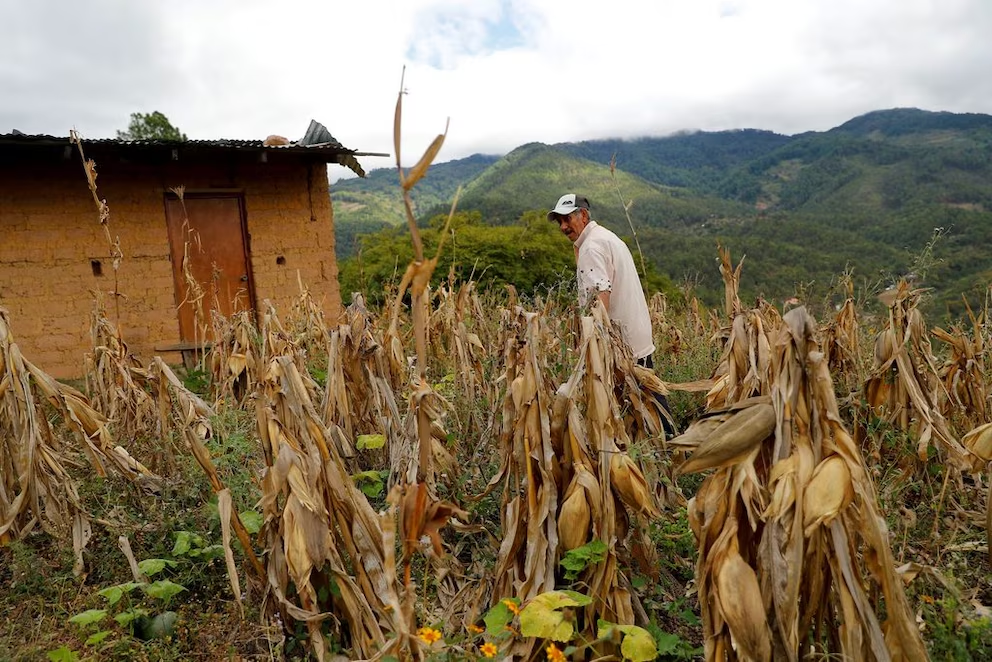
Costa Rican Government initiative to restore the production of 23,958 agricultural producers affected by the November 2024 rains associated with the indirect effects of Hurricane Rafael. The intervention involves public investment exceeding CRC 5.5 billion and is being implemented across seven productive regions of the country. The National Commission for Risk Prevention and Emergency Response (CNE) finances the process, while the Ministry of Agriculture and Livestock (MAG) implements activities in the territory. CNE approved 11 investment plans and has four additional plans under review. The intervention provides technological packages including fertilizers, fungicides, seeds, animal feed, minerals, silage, beekeeping inputs and other productive materials according to the impacts recorded in each production system. Activities cover coffee, beans, maize, sugarcane, fruits, vegetables, roots and tubers, cattle, pigs, poultry and beekeeping. The initiative seeks to restore farm productive capacity, support the recovery of rural economies and contribute to food security.
Sustainable Regenerative Livestock in the Arenal-Huetar Norte Conservation Area (ACAHN)
Project aimed at transforming livestock production in the Arenal-Huetar Norte Conservation Area of Costa Rica through sustainable and regenerative practices, stronger governance and capacity building for producers and institutions, access to incentives and finance, silvopastoral systems, improved grazing, soil and water management, restoration of riparian forests and wetlands, digital monitoring, traceability and deforestation-free production. The intervention seeks to strengthen rural livelihoods, reduce greenhouse gas emissions, conserve biodiversity and restore ecosystems, with attention to women, youth and the Maleku Indigenous people.
Support for conventional coffee production through the delivery of agricultural inputs and equipment in the Atenas–Palmares–San Ramón–Naranjo–Zarcero territory
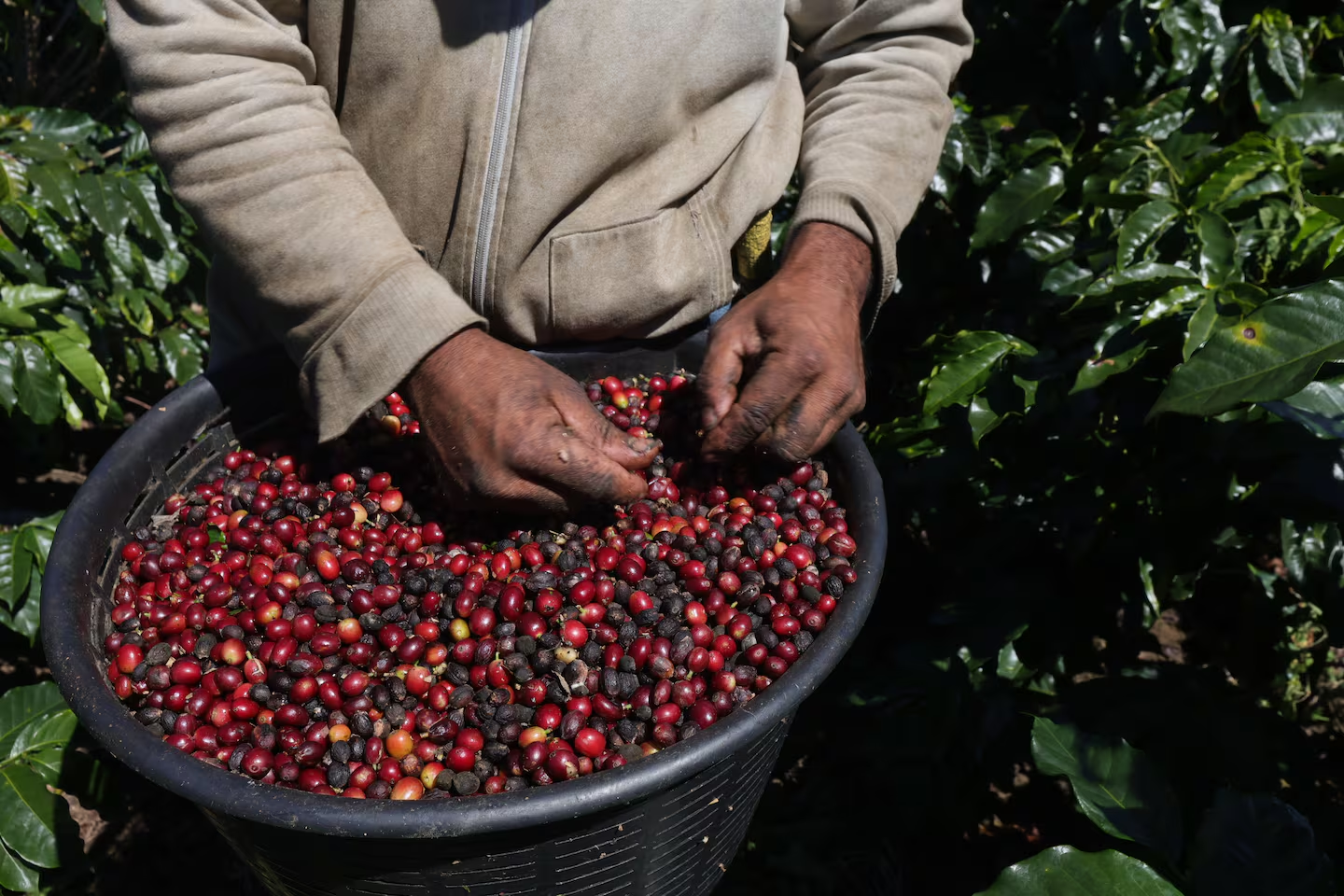
Project implemented by Costa Rica's Rural Development Institute (Inder) to strengthen coffee production and improve the productive conditions of 97 coffee-producing families in Atenas, Palmares, San Ramón, Naranjo and Zarcero. The intervention provides agricultural inputs and equipment for the management, maintenance and strengthening of coffee plantations. It seeks to increase productivity, reduce costs, facilitate agricultural operations, promote more efficient and sustainable practices, and improve adaptation and resilience to climate change. The equipment also contributes to reducing dependence on herbicides, supporting soil conservation and water resource protection, and strengthening the competitiveness and economic sustainability of production units.
Policy frameworks
(183 records
)
Strategy on Bioinputs Production, Use and Innovation in Costa Rica 2026-2035
National strategy setting the roadmap to 2035 to consolidate bioinputs as an accessible, competitive and quality-assured alternative for sustainable agricultural production. It is organized into four axes: (1) regulatory framework, to simplify, harmonize and update rules on the registration, classification, use, quality control and oversight of bioinputs, including efficacy protocols, user manuals and post-registration monitoring; (2) science, technology and innovation, through a national research agenda, quality and efficacy standards, a national microorganism repository and pilot projects; (3) capacity building and knowledge transfer, including specialized training, agricultural extension, inclusion of bioinput content in higher education and knowledge management; and (4) financing and promotion, with credit and incentive schemes, non-financial mechanisms such as quality seals and sustainable public procurement, and mobilization of cooperation funds. It establishes a multilevel governance structure, an action plan with targets and indicators, and evaluations at 3, 5 and 10 years.
Costa Rica Nationally Determined Contribution 2025-2035
Costa Rica's Nationally Determined Contribution 2025-2035 updates the country's climate commitments through an integrated vision linking mitigation and adaptation under the principles of progression, environmental integrity, transparency and social justice. The framework consolidates and raises climate ambition through a multisectoral portfolio of actions aimed at decarbonization, climate resilience and nature-based solutions. It includes mitigation targets, ecosystem protection and restoration, stronger territorial resilience, institutional arrangements for implementation, and commitments related to gender equality, youth participation and recognition of Indigenous Peoples.
Ministerial Directive MAG-DM-001-2026 for the Comprehensive Review of the Regulatory Framework, Regulatory Improvement and Simplification of Procedures in the Agricultural Sector
Ministerial Directive MAG-DM-001-2026 of Costa Rica's Ministry of Agriculture and Livestock establishes guidelines for a comprehensive review of the regulatory framework, regulatory improvement and simplification of administrative procedures across Agricultural Sector institutions. The measure seeks to review and rationalize regulations and administrative procedures affecting the operation of public institutions and services provided to the agricultural sector, strengthen institutional efficiency and reduce unnecessary administrative burdens. The Directive provides a ministerial framework for organizing regulatory review and administrative simplification processes within Costa Rica's Agricultural Sector.
Good practices
(10 records
)
Strengthening Strategic Capacities for Water Security in Prioritized Watersheds of the SICA Region
The project aims to contribute to water security in prioritized watershed territories of the SICA region by producing technical diagnostic studies, cost-of-inaction/benefit-of-action analyses (BACI), and strategic water investment plans with bankable project profiles per watershed. It operates in 8 watersheds across 8 countries —Belize, Guatemala, Honduras, El Salvador, Nicaragua, Costa Rica, Panama, and the Dominican Republic— incorporating gender, intercultural, and climate risk perspectives
Strategy for Technological Innovation to Improve the Productivity and Competitiveness of Supply Chains in Central America and the Dominican Republic
PRESICA developed a regional agricultural innovation model based on Local Innovation Consortia, which bring together producers, research institutes, universities, NGOs, and the private sector around value chains for corn, beans, cassava, and sweet peppers. The strategy was grounded in producers’ technological needs to drive research, technology validation, technology transfer, and extension services with a territorial focus. The project operated in eight Central American countries and the Dominican Republic, forming 22 local consortia. It contributed to strengthening national and regional agricultural innovation systems as a public good.
Integrating sorghum cultivation into agricultural systems in the Central American Dry Corridor
The project establishes a regional partnership for the sustainable intensification of the Dry Corridor through the integration of climate-resilient sorghum and forage crop genotypes. Through soil characterization and a digital recommendation platform, the project aims to increase productivity and water availability in vulnerable agricultural systems. The initiative, funded by the Government of New Zealand (GRA), will transfer technical knowledge and precision technology to producers, advisors, and students in the region.
PAESA in Focus
(5 records
)