+506 2216 0222
paesa@iica.int


DID YOU KNOW?
-
Community alert prevented deaths
19 people, mostly women farmers, operate the Community Hydroclimatic Monitoring Network in southern Ahuachapán, El Salvador; during Tropical Storm Julia, an alert issued after more than six hours of rain enabled vulnerable families to evacuate two h... -
Only 6% of budgets prevent future risks
83% of disasters in Latin America and the Caribbean are related to climate hazards, but only 6% of the regional risk-management budget is allocated to preventing future risks and 16% to reducing existing risks. -
1.7 million disaster displacements
1.7 million new internal displacements caused by disasters were recorded in 2024 in Brazil, Cuba, Colombia, Haiti and Ecuador alone, according to the 2025 Global Report on Internal Displacement cited by the source.
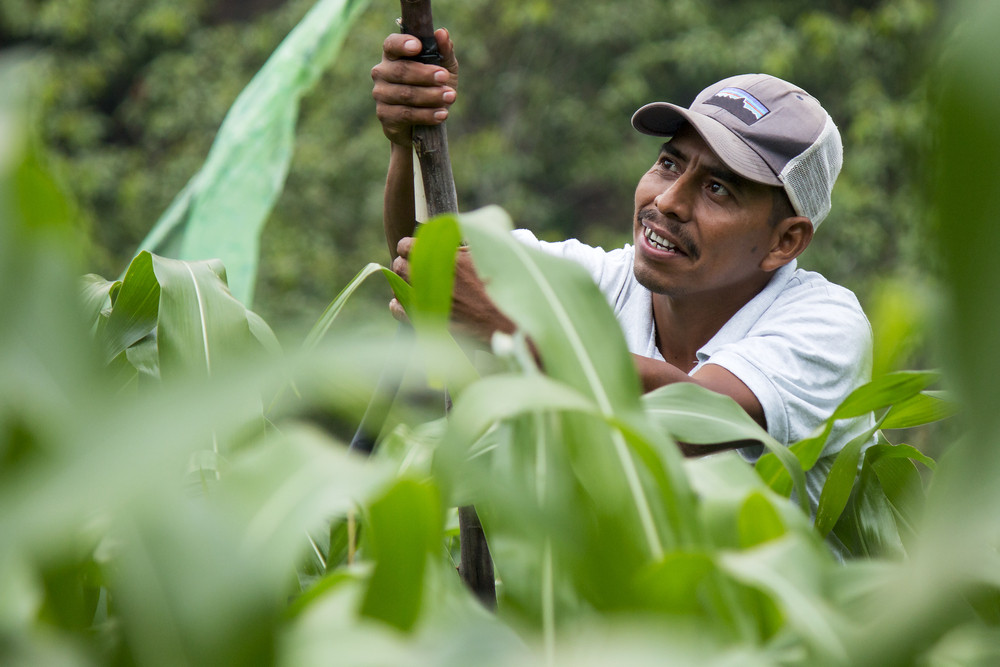
Agricultural producers
Agricultural producers are people dedicated to the production of agricultural and livestock goods, such as crops, livestock, poultry, among others, in order to sell these products in the market. These producers can have different production sizes, from small family farms to large agro-industrial companies.
Resources
(581 records
)
Events
(132 records
)
Evidences
(2554 records
)
Community alert prevented deaths
19 people, mostly women farmers, operate the Community Hydroclimatic Monitoring Network in southern Ahuachapán, El Salvador; during Tropical Storm Julia, an alert issued after more than six hours of rain enabled vulnerable families to evacuate two hours before the rivers overflowed, with no loss of life.
Only 6% of budgets prevent future risks
83% of disasters in Latin America and the Caribbean are related to climate hazards, but only 6% of the regional risk-management budget is allocated to preventing future risks and 16% to reducing existing risks.
1.7 million disaster displacements
1.7 million new internal displacements caused by disasters were recorded in 2024 in Brazil, Cuba, Colombia, Haiti and Ecuador alone, according to the 2025 Global Report on Internal Displacement cited by the source.
More recent in politics
Investments and Public Expenditure
(735 records
- USD 133,621,733,497.00
)
National procurement and distribution of urea for the 2022-2023 agricultural season
National intervention authorized by Emergency Decree 013-2022 for MIDAGRI, through AGRO RURAL, to procure urea from the international market and distribute it to agricultural producer organizations and individual producers operating farms of up to five hectares, in support of the 2022-2023 agricultural season and food security.
Second phase of the Nature and Environment Policy Plan for the Caribbean Netherlands: 2027 funding
2027 budget allocation for the second phase of the Nature and Environment Policy Plan for the Caribbean Netherlands, aimed at strengthening and restoring the ecosystems of Bonaire, St. Eustatius and Saba. It covers the restoration of vegetation and coral, the control of erosion and overgrazing, the reduction of invasive species and water pollution, and improvements in nature conservation and monitoring. Its objective is a natural environment that is more resilient to climate change while contributing to a healthy living environment and economy on the islands.
Automation of irrigation gates managed by the Taco General Canal Users Association
Project to automate irrigation gates managed by the Taco General Canal Users Association of the Maule River, a member of the Central Irrigation Cooperative. The project is designed to modernize water management and distribution across approximately 15,000 hectares between the municipalities of San Clemente and Talca in the Maule Region. Partially financed through a grant from the National Irrigation Commission, the intervention will enable automated gate operation, improve flow control and optimize water use. As of 17 September 2026, construction was approximately 95 percent complete and operation was expected to begin before the 2026-2027 irrigation season.
Policy frameworks
(1289 records
)
Peru: Emergency Decree No. 106-2021 authorizing financial subsidies for producers purchasing fertilizers
Emergency Decree No. 106-2021 authorizes Peru's Ministry of Agrarian Development and Irrigation to grant financial subsidies, channeled through the AGROPERÚ Fund, to producers who purchased fertilizers during the 2021-2022 agricultural season and operate agricultural units of between two and ten hectares. The decree authorized a PEN 250,947,734 public budget transfer to finance the subsidies, AGROPERÚ Fund financial expenses and MIDAGRI operating expenses, in support of agricultural production and food security.
Strategy on Bioinputs Production, Use and Innovation in Costa Rica 2026-2035
National strategy setting the roadmap to 2035 to consolidate bioinputs as an accessible, competitive and quality-assured alternative for sustainable agricultural production. It is organized into four axes: (1) regulatory framework, to simplify, harmonize and update rules on the registration, classification, use, quality control and oversight of bioinputs, including efficacy protocols, user manuals and post-registration monitoring; (2) science, technology and innovation, through a national research agenda, quality and efficacy standards, a national microorganism repository and pilot projects; (3) capacity building and knowledge transfer, including specialized training, agricultural extension, inclusion of bioinput content in higher education and knowledge management; and (4) financing and promotion, with credit and incentive schemes, non-financial mechanisms such as quality seals and sustainable public procurement, and mobilization of cooperation funds. It establishes a multilevel governance structure, an action plan with targets and indicators, and evaluations at 3, 5 and 10 years.
Food 2040: Research and innovation for food systems
Food 2040 is the European Union research and innovation framework for food systems and one of the two closely interlinked components of the EU strategic approach to research and innovation towards 2040. It follows a systemic, cross-sectoral and multi-actor approach covering food processing and manufacturing, packaging, distribution and retail, food services, consumption, food waste and recycling, as well as fisheries and aquaculture. Through research and innovation, it aims to contribute to more competitive, sustainable, healthy, fair and resilient food systems while strengthening connections between knowledge generation, experimentation, investment, regulatory learning, market uptake and innovation deployment. Its shared priorities include competitiveness and innovation scale-up; food security, resilience and preparedness; natural resources and circularity; food and feed safety, nutrition and health; fairness; and global cooperation.
Good practices
(49 records
)
Rural Enterprise and Agricultural Development Project (READ)
Project implemented in six regions of Guyana to improve the social and economic conditions of poor rural households, especially small-scale producers and vulnerable groups. READ expanded access to financial services and strengthened enterprise and market development, technical assistance, extension and training. The target group comprised 5,200 rural households, equivalent to about 20,800 people, with particular attention to woman-headed households, youth, Amerindian communities, non-traditional crop farmers and operators of rural micro and small enterprises. The Ministry of Agriculture was the executing agency and IFAD provided both loan and grant financing.
Conservation and Sustainable Use of Agro-biodiversity to Improve Human Nutrition in Five Macro Eco-regions (Bolivia)
Project aimed at conserving agro-biodiversity in situ across five macro eco-regions and improving the livelihoods of local populations. It seeks to mainstream the valuation, conservation and sustainable use of agro-biodiversity into national policies, regulatory frameworks, and health, education, rural development and food security programmes. It includes the generation of market incentives and awareness-raising and training processes for the sustainable management of natural resources.
National Agricultural Innovation System Support Project (PNIA)
The project supports the establishment and consolidation of the National Agricultural Innovation System by strengthening the institutional capacity of the lead public agency, building decentralized innovation networks with public and private stakeholders, and administering competitive grant funds for subprojects in strategic research, adaptive research, agricultural extension, seed enterprise development, and capacity building. It includes a national and international scholarship program for researchers and extension professionals, as well as the design of a monitoring and evaluation system for the agricultural innovation system. Its objective is to create the conditions for member organizations of the national innovation system to improve their effectiveness in developing and delivering improved agricultural technologies to rural producers.
PAESA in Focus
(5 records
)