+506 2216 0222
paesa@iica.int





Investments and Public Expenditure
(1864 records
- USD 363,337,327,883.00
)
Second phase of the Nature and Environment Policy Plan for the Caribbean Netherlands: 2027 funding
2027 budget allocation for the second phase of the Nature and Environment Policy Plan for the Caribbean Netherlands, aimed at strengthening and restoring the ecosystems of Bonaire, St. Eustatius and Saba. It covers the restoration of vegetation and coral, the control of erosion and overgrazing, the reduction of invasive species and water pollution, and improvements in nature conservation and monitoring. Its objective is a natural environment that is more resilient to climate change while contributing to a healthy living environment and economy on the islands.
Green fertilizer project with clean hydrogen (Atome – IFC)
A project spearheaded by Atome Energy in partnership with the International Finance Corporation (IFC) aims to develop a green fertilizer production plant using clean hydrogen. The initiative seeks to produce ammonia and fertilizers with low carbon emissions, utilizing renewable energy as a key input.
Climate Change Resilience in the Caribbean Fisheries Sector (CC4FISH-II)
Regional project designed to strengthen climate change and disaster adaptation and resilience in the fisheries sectors of Dominica, Grenada, Saint Kitts and Nevis, Saint Vincent and the Grenadines, and Trinidad and Tobago. The initiative will benefit more than 21,800 people, including small-scale fisherfolk, boat owners, processors, vendors, traders and coastal communities, with particular attention to women and youth. Interventions include climate-resilient fishing vessels and infrastructure, restoration and monitoring of coral reefs, mangroves and seagrass beds, integration of climate adaptation and disaster risk management into fisheries planning, access to insurance and financial services, training, technology and regional dissemination of good practices.
Policy frameworks
(3774 records
)
Law 543 of 2026: Mandatory Identification of Origin and Differentiation of Original, Substitute and Imitation Food Products
Law 543 of July 7, 2026 establishes mandatory identification of origin and differentiation of original, substitute and imitation food products in Panama, with the objective of protecting consumers and domestic producers, preventing misleading commercial practices and ensuring clear information about the nature and origin of food products. The Law requires commercial establishments to visibly identify products as domestic or imported, display the product name in Spanish and indicate the country of origin, and clearly warn consumers when products are substitutes or imitations. Substitute and imitation products must carry specific signage and be physically separated by at least one meter from original products. Imported food products must be marketed under the same technical specifications and origin conditions under which they entered the country, and frozen meat products may not be presented in a manner that could cause consumers to confuse them with fresh domestic products. The Consumer Protection and Competition Defense Authority (ACODECO) is responsible for enforcement, with fines of up to fifteen thousand balboas and certain violations classified as food fraud. The Law also requires consumer-awareness and education campaigns, repeals Law 113 of 2019 and will enter into force one year after promulgation.
USDA Suite of Trade, Development and Food Security Opportunities for Venezuela
A package of USDA programs and instruments intended to strengthen agricultural trade, market access, and food security in Venezuela. It includes market promotion, export credit guarantees through GSM-102, technical cooperation and training through the Borlaug and Cochran programs, and evaluation of food assistance and agricultural development mechanisms.
Brazil: Ordinance Allocates up to R$500 Million for Rice Purchases and Public Stocks
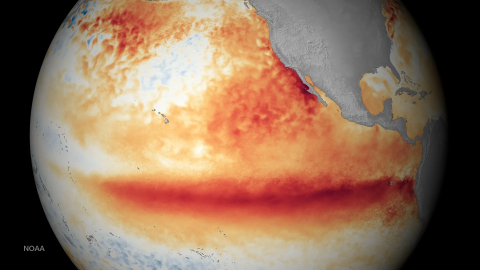
Interministerial Ordinance MDA/MAPA/MF No. 20 of 2026 authorizes Brazil's National Supply Company to purchase long fine paddy rice from the 2025/2026 crop through public auctions to build public stocks. The measure allocates up to R$500 million for purchases intended to mitigate impacts associated with the El Niño phenomenon. Purchases may take place in rice-producing states where the market price calculated by Conab exceeds the current minimum price. The maximum purchase price will be 125 percent of the applicable minimum price, and rural producers and producer cooperatives may participate.
Good practices
(116 records
)
Sustainable and Resilient Agroforestry
This initiative is a Specific Investment Loan operation (HO-L1259) in Honduras, to be executed by ICF, aimed at conserving and restoring forest cover and associated ecosystem services in prioritized areas. Its overall objective is to conserve and restore forest cover, with specific objectives to: (i) increase adoption of forest and agroforestry practices (AFS/SPS) that expand forest cover, (ii) diversify livelihoods in community forestry, and (iii) strengthen ICF’s institutional capacity for forest conservation and management. The project targets selected municipalities in Olancho, Yoro, Atlántida, Colón and El Paraíso, prioritized through environmental and social criteria related to restoration, hydrology and climate vulnerability, among others. The components include: (I) implementation of agroforestry and silvopastoral systems through technical assistance and technology packages, (II) community forest management via business plans, integrated technical assistance and knowledge exchanges, and (III) institutional strengthening of ICF (forest registry/monitoring, wildfire risk prevention/management, regulatory updates, and land tenure-related aspects). Total financing is US$25 million (60% regular and 40% concessional ordinary capital), with Category B environmental and social classification and Substantial E&S risk, supported by required E&S management instruments (ESA/ESMP/SEP) and applicable Environmental and Social Performance Standards.
Support to Sustainable Rural and Agricultural Development
This initiative is a Technical Cooperation (HA-T1341) in Haiti to support sustainable rural and agricultural development, focusing on strengthening implementation of the PAPAIR operation (HA-J0002) and identifying new investment opportunities to improve productivity, food security, and climate resilience in the country’s northern region. The TC responds to delays and limited operational capacity within MARNDR to implement PAPAIR (low disbursement rate and challenges in procurement, operational management, and planning), compounded by political, institutional, and security instability. Its specific objectives are to: (i) strengthen the Ministry’s capacity to implement PAPAIR, (ii) extract lessons learned from past and ongoing operations (including incentive mechanisms, subsidies, and technical assistance instruments, as well as private-sector experiences), and (iii) support the design of new strategies and investments (including sustainable value chains and a feasibility study for rehabilitating irrigation infrastructure). The TC is structured into three components: implementation support to PAPAIR through consultancies (procurement/contract management, rural infrastructure, M&E, gender and diversity), lessons learned, and identification/design of new strategies and investments; with outputs shared with public authorities, private-sector actors, and development partners. It will be executed by the IDB at the request of the Government of Haiti, in close coordination with MARNDR (monthly meetings and a designated focal point), funded by OC-SDP resources from W1D and W2A/W2B windows totaling US$300,000 over 24 months, starting on September 1, 2025.
Sustainable artisanal fisheries and bio-businesses for food security with market access in the Peru–Colombia Border Integration Zone
Sustainable artisanal fisheries and bio-businesses for food security with market access in the Peru–Colombia Border Integration Zone is a binational technical cooperation initiative in the Putumayo River basin aimed at strengthening sustainable artisanal fishing and food security. It promotes cross-border governance through a binational roundtable, diagnostics and monitoring campaigns focused on water quality and fish species of commercial interest. It supports fisheries value-chain bio-businesses through awareness and technical training, financial education, technical assistance, formulation of business models and non-reimbursable equipment support, plus binational fairs and strategic commercial alliances. It also includes community food security plans, training in good food practices, field schools and collective solutions for access to safe water such as collection, filtration and storage. The initiative is implemented in Peru and Colombia over 24 months, financed by the Colombia–Peru Border Integration Zone Development Fund, with a required start in September 2025.
Resources
(2077 records
)

Events
(659 records
)
PAESA in Focus
(12 records
)